The missing link in Sydney's active transport network
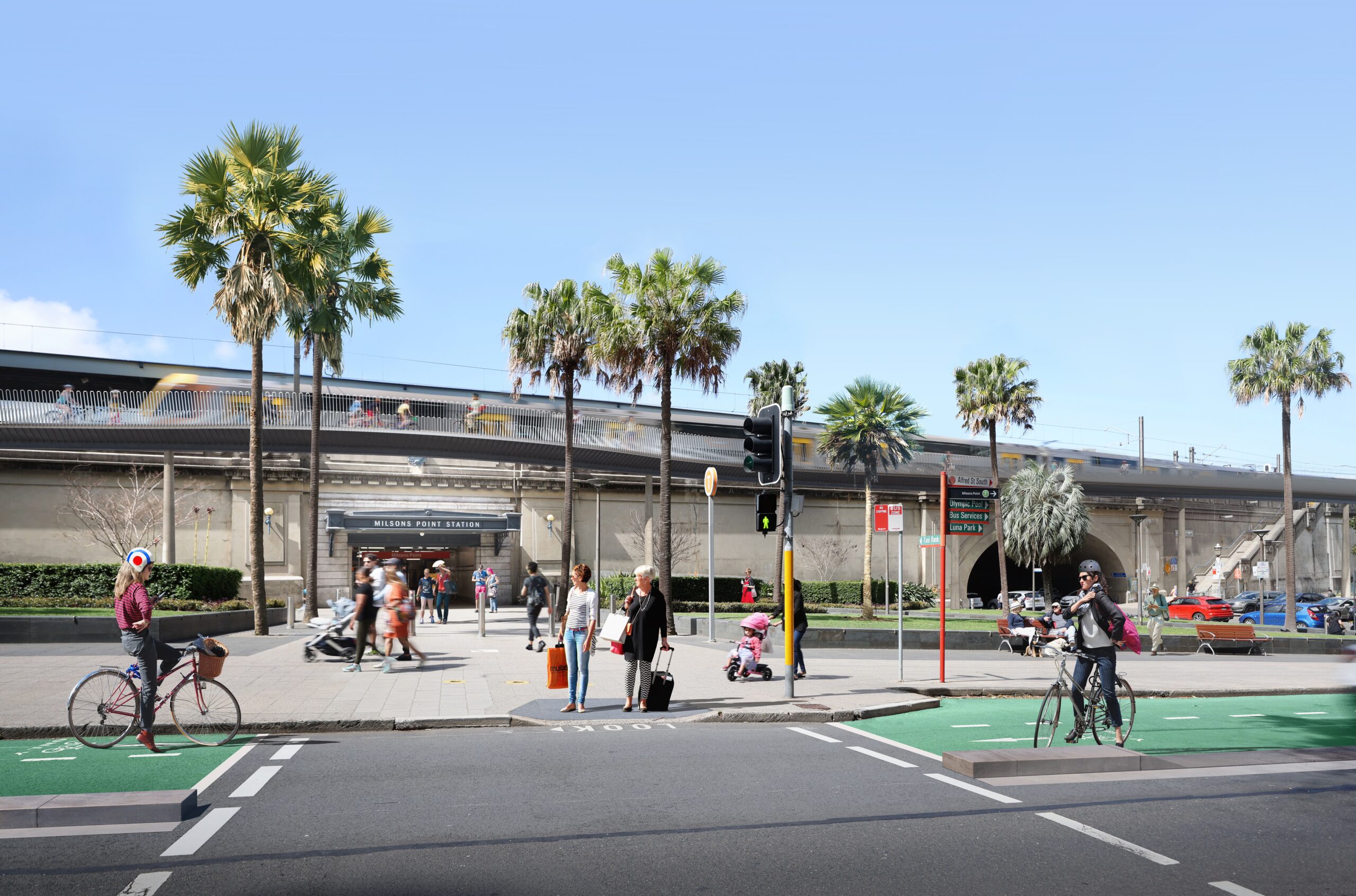
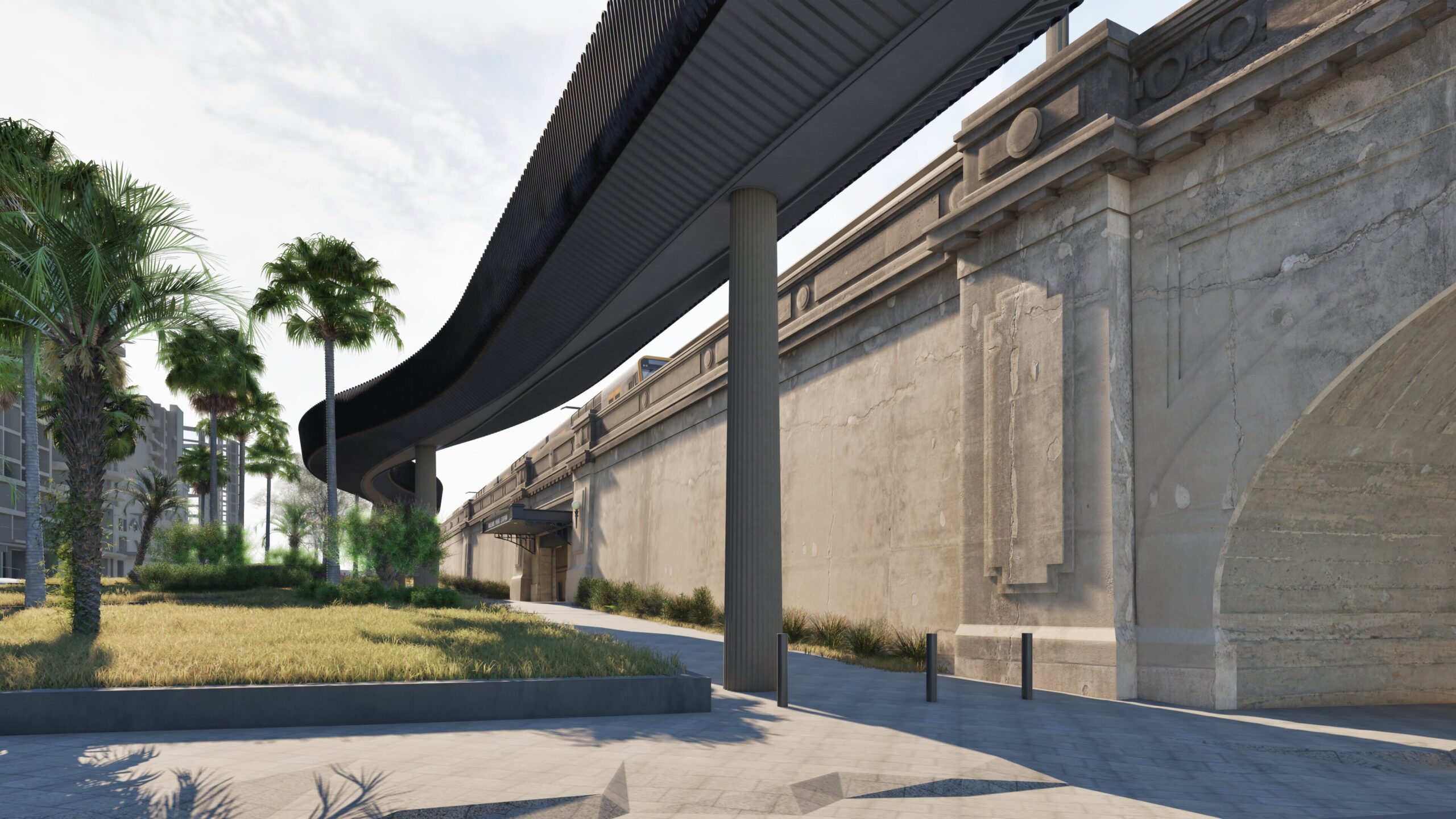
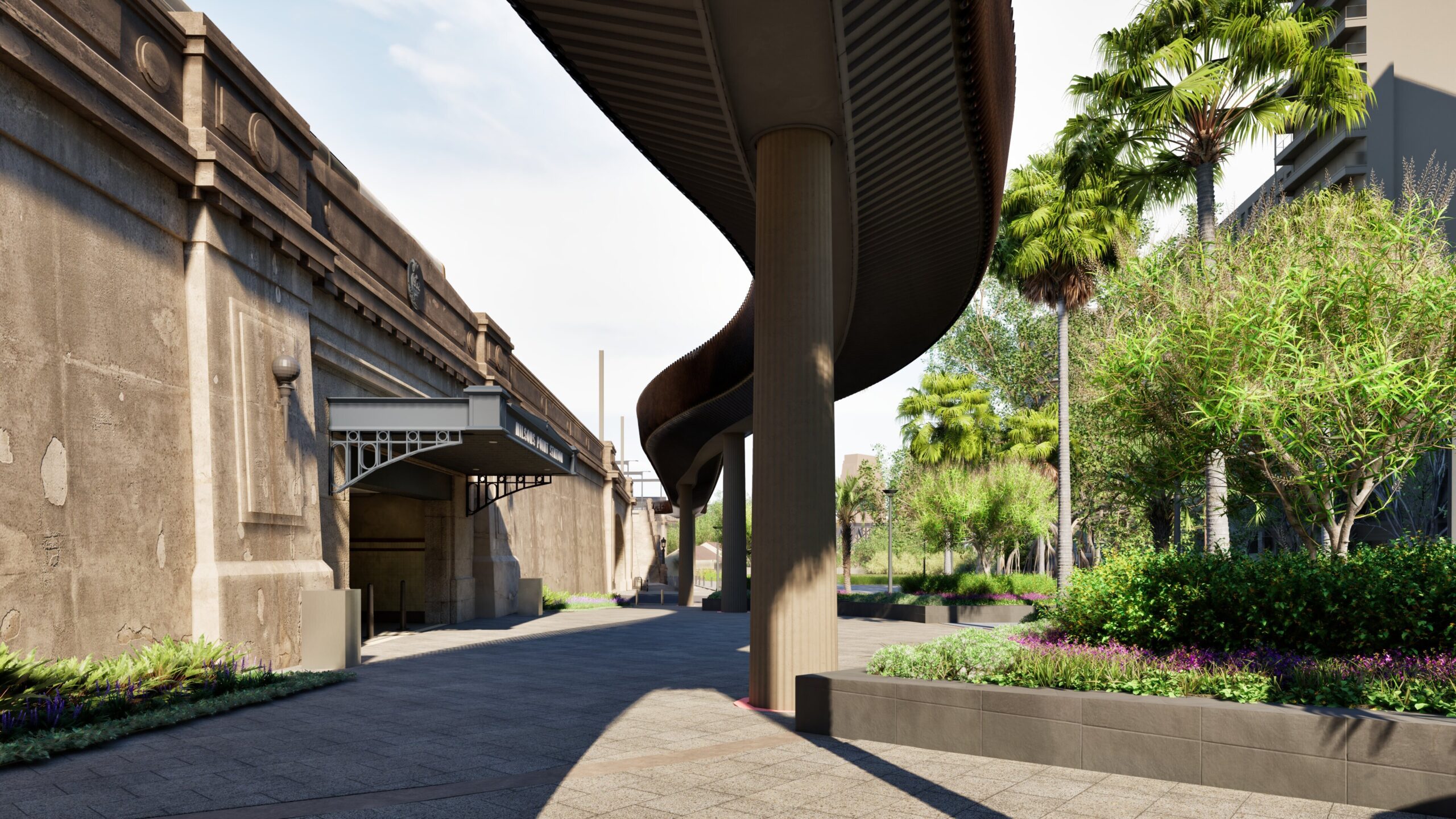
The new cycleway ramp at the northern end of the Sydney Harbour Bridge will provide a safe, accessible, and enjoyable experience for people of all ages and cycling abilities—while honouring the heritage and iconic stature of the bridge itself.
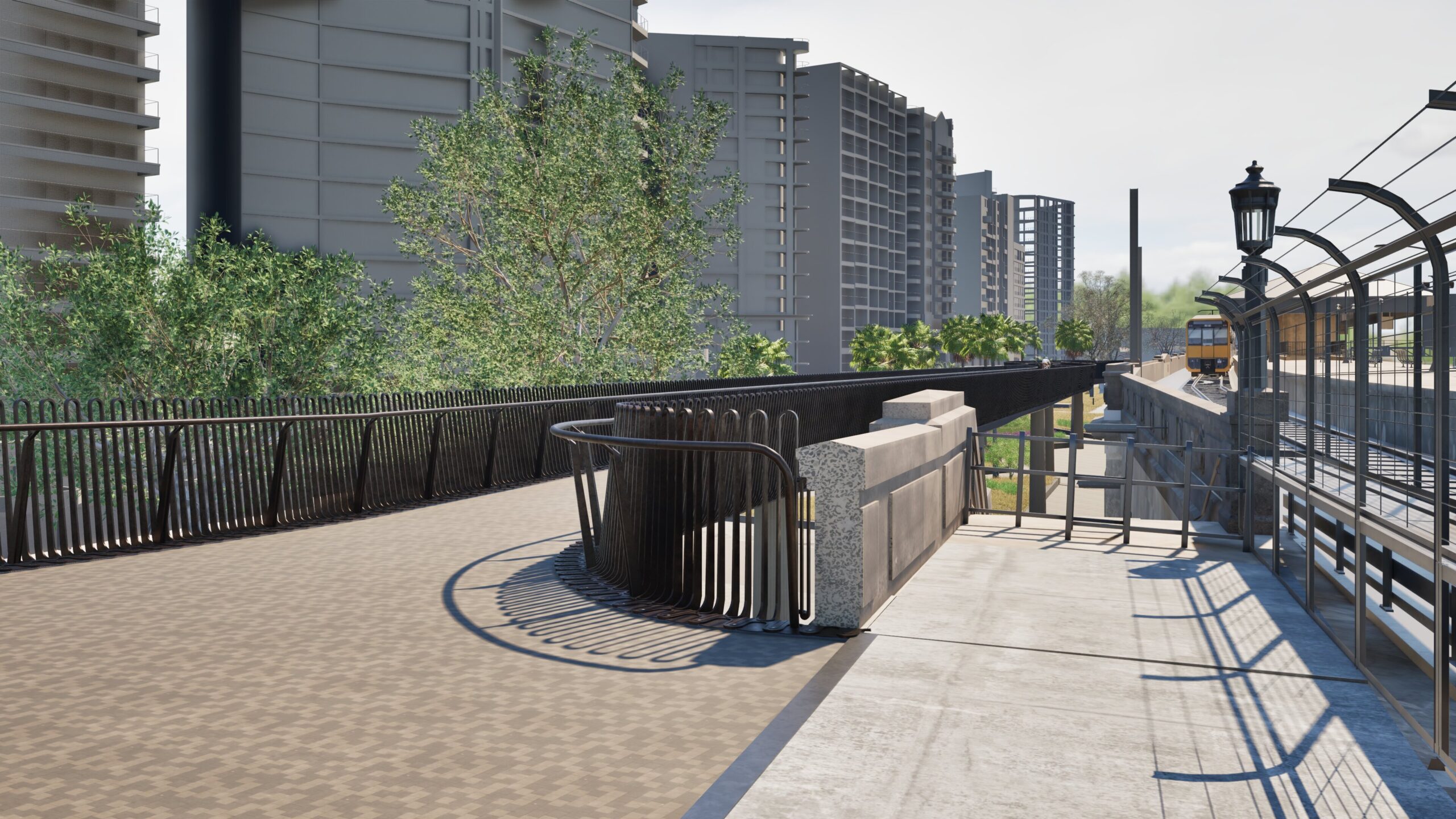
As the most heavily used cycle route in Sydney, the Harbour Bridge cycleway accommodates approximately 2,000 bike trips each weekday. Currently, cyclists face the challenge of navigating 55 steps to connect between the main bridge path and Bradfield Park North. The new ramp will remove this barrier, creating a seamless and accessible link.
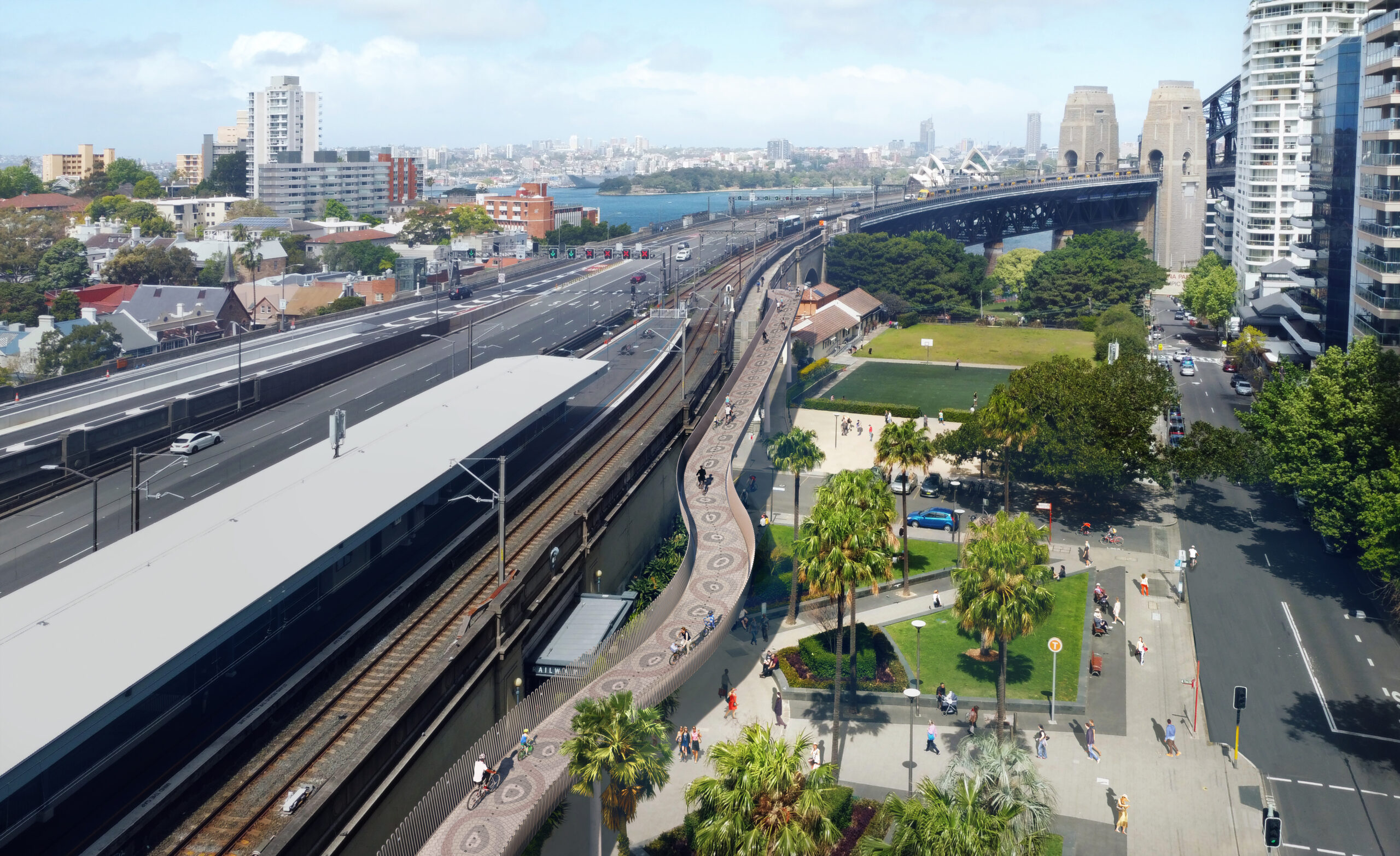
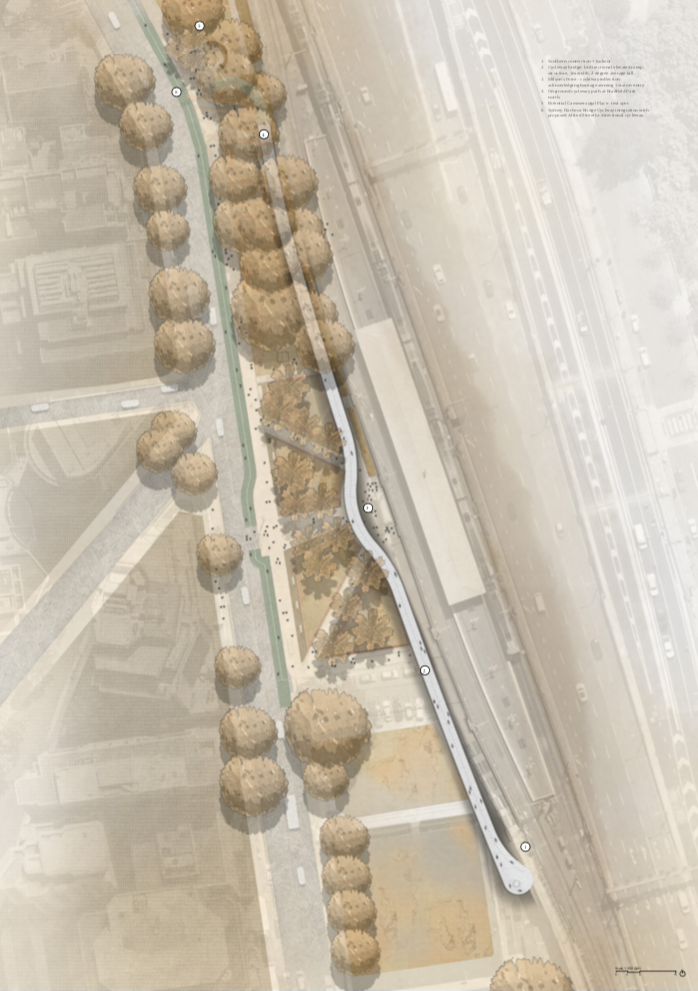
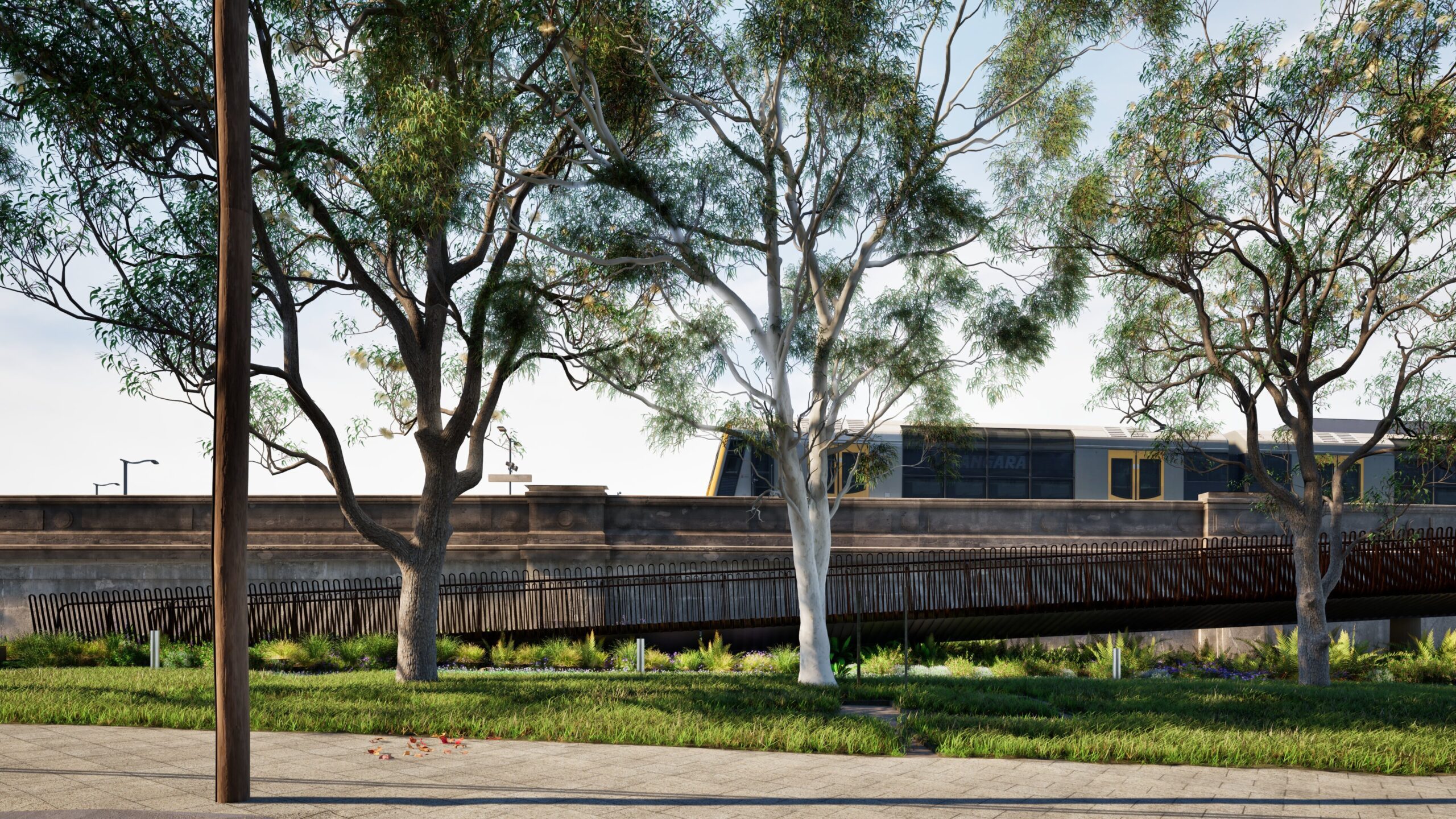
The 190-metre-long structure has been thoughtfully designed to respond to its unique setting. Its alignment and form are shaped by careful consideration of cyclist safety and comfort, the surrounding heritage, architectural context, and the parkland environment.
This essential piece of civic infrastructure strikes a balance between local sensitivity and broader city-wide opportunity. It will significantly enhance the safety, capacity, and connectivity of the Harbour Bridge cycleway, making cycling a more attractive and practical transport choice. The design meets the project’s central challenge: delivering functional, high-quality infrastructure while preserving the cultural, natural, and historical significance of the site—including Country, the Harbour Bridge, and Bradfield Park.
Integrating architecture, engineering, industrial design, and the public domain, the project addresses complex requirements while enhancing its context. It is designed to serve not only cyclists, but the broader community as well.
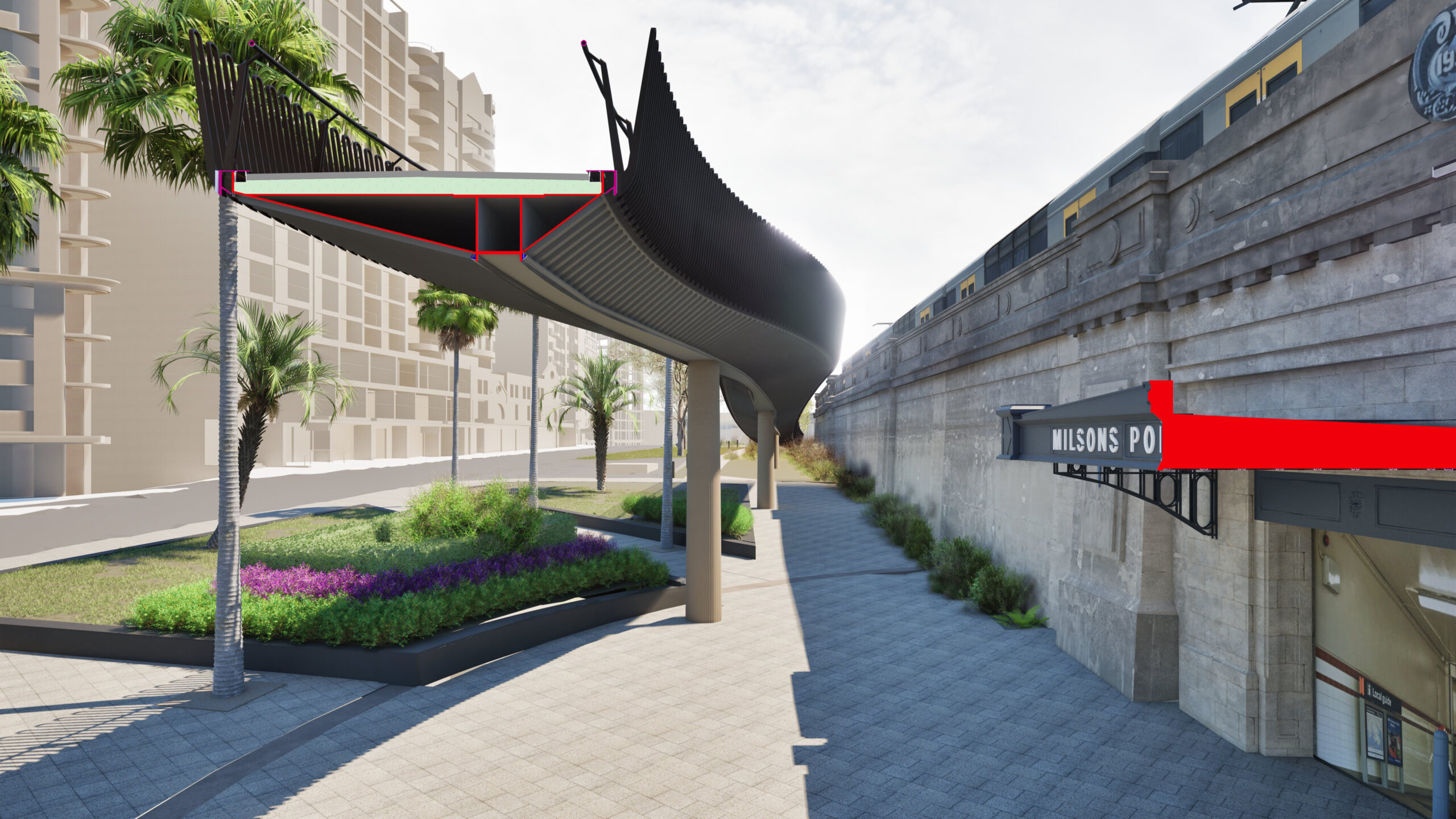
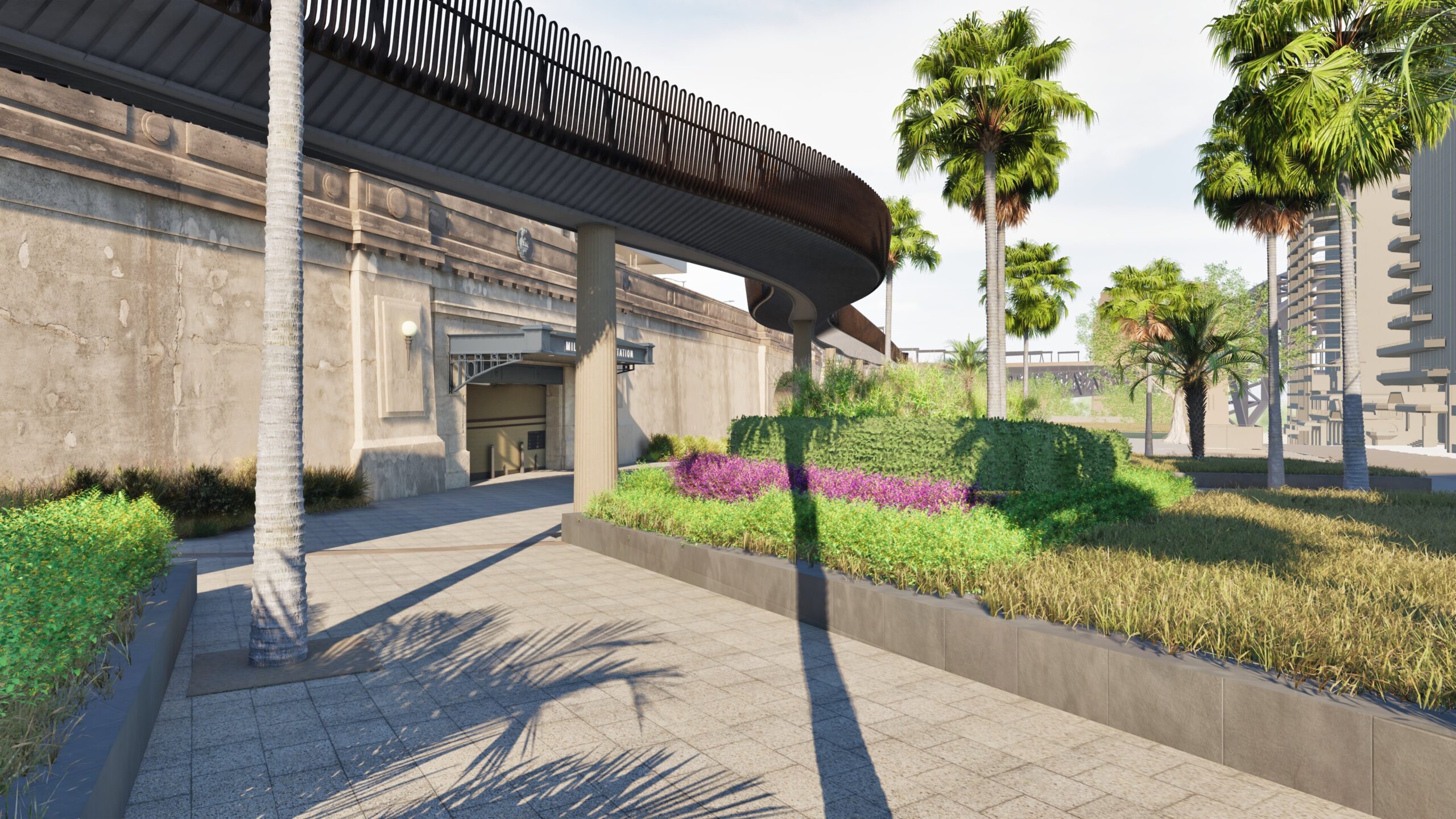
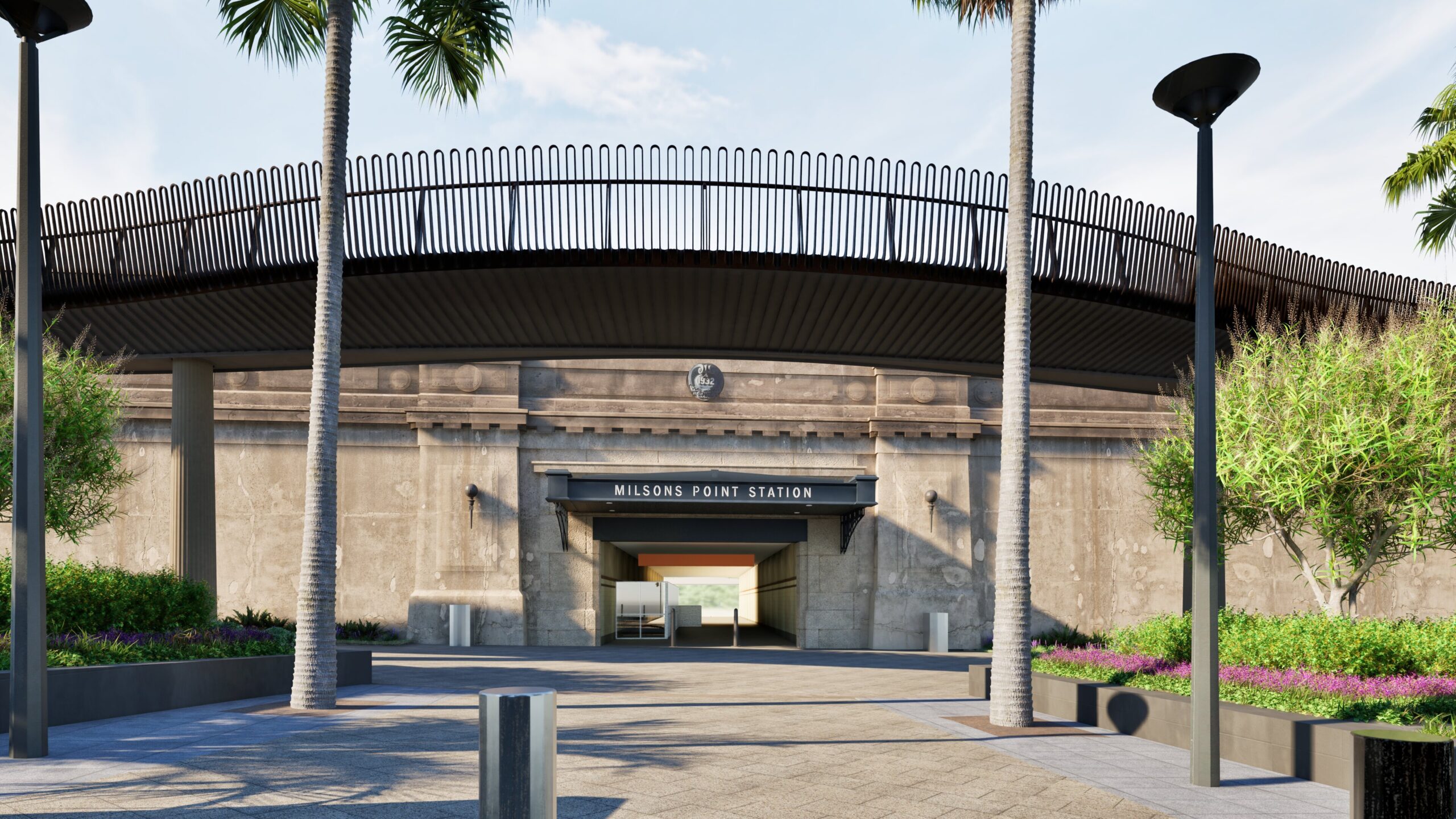
The ramp’s serpentine form—composed of complementary curves—is both elegant and efficient. Its organic geometry emphasises lightness, fluidity, and transparency, balanced with robustness, constructability, sustainability, and ease of long-term maintenance. The result is a minimal visual impact on the Harbour Bridge and Bradfield Park, with careful consideration given to reducing overshadowing on the parkland below. A central sweeping beam enables off-centre pier placements, allowing greater flexibility to harmonise the structure with its surroundings.
The paving design draws inspiration from local marine life, honouring the enduring connection to Country. Two intertwined eels, symbolising the Gadigal and Cammeraygal peoples, travel north and south along the cycleway, representing both spiritual and physical connections at this historically significant crossing point on Sydney Harbour.
Pedestrian and cyclist safety will be further improved through new footpaths and crossings on Alfred and Lavender Streets. A newly designed public plaza will connect the cycleway ramp with Bradfield Park, creating a welcoming civic space. The plaza will feature seating, a water fountain, and a bike repair station—offering comfort and convenience for commuters and visitors heading to Milsons Point Station and beyond.
This landmark project aims to set a new international benchmark for integrating cycling infrastructure into sensitive heritage environments, while offering a compelling vision for the future of active transport in Sydney.
Details
- Client
- Transport for New South Wales
- Country
- Cammeraygal
- Architecture
- Collins and Turner
- Landscape and Urban Design
- Aspect Studios
- Structure
- Eckersely O'Callaghan + Stantec
- Industrial Design
- Eckersely O'Callaghan
- Civil Engineering
- Stantec
- Hydraulic
- Stantec
- Heritage
- Design 5 Architects
- Lighting
- Electrolight
- Active Transport
- Josh Milson
- Designing with Country
- Yerrabingin
- Collaborating Artsists
- Maddison Gibbs and Jason Wing
- Model
- Make Models